
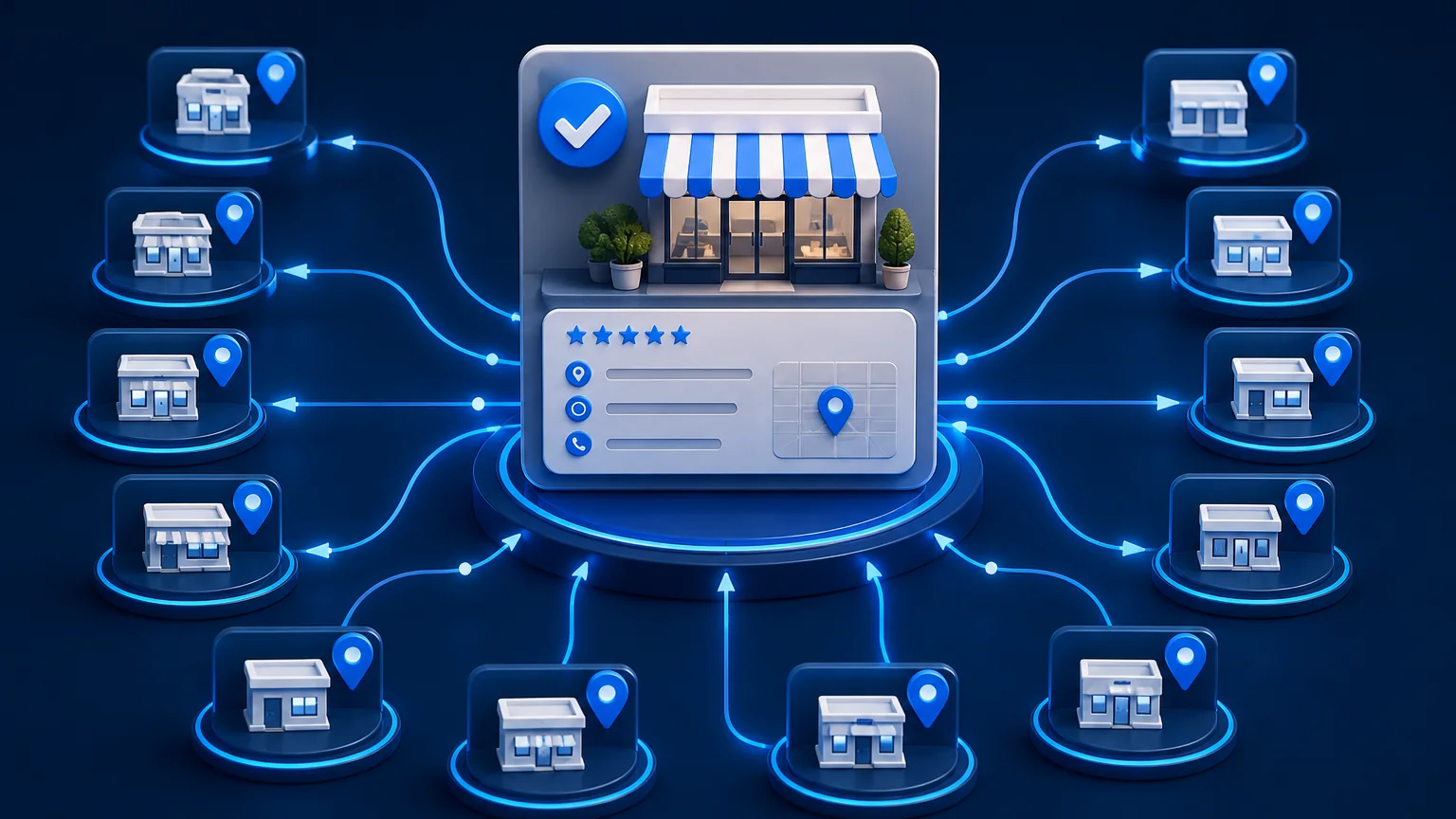
Directory submission services create or claim business listings on websites that customers, search engines, maps, and AI systems use to verify local companies. A useful service prioritizes accurate business data and relevant coverage. A weak service sells a large submission count without explaining where the listings will appear or who will own them.
For a local business, directory submission should be treated as citation distribution—not a shortcut for manufacturing hundreds of low-quality backlinks. The strongest plan starts with core platforms, adds credible industry and local directories, and keeps every important record aligned with your approved business information.
Local Directory Submission vs Link Submission
| Approach | Primary goal | What a useful result looks like |
|---|---|---|
| Local business listing | Verify and distribute business identity | Accurate NAP, category, URL, hours, and location data |
| Industry directory | Reach a relevant professional audience | Complete profile on a credible niche platform |
| Local directory | Build geographic relevance and discovery | Listing on a real chamber, association, or local resource |
| Generic link directory | Acquire a backlink | Often low-value unless the directory serves a real audience |
The distinction matters because the searcher and business outcome are different. A local listing can help customers find a phone number, route, category, or service. A directory that exists only to sell links may send no customers and add little trust. Evaluate the audience and listing quality before counting the domain.
What a Directory Submission Service Should Do
- Collect and validate one source of truth for every location
- Check for existing profiles before creating new ones
- Claim or create listings with business-owned contact details
- Select accurate categories rather than the broadest available option
- Use honest descriptions, hours, service areas, and website URLs
- Complete platform verification steps and record the outcome
- Return a report with live URLs, credentials, status, and exceptions
- Explain how listings will be maintained after submission
The service should also identify errors discovered during the process. If an old address or duplicate profile already exists, creating another listing may deepen the problem. That case belongs in a cleanup queue before or alongside submission.
How to Evaluate the Directory List
Ask to see the proposed categories of sites, not just a number. A balanced list normally includes core maps and discovery platforms, major business directories, data providers, respected industry resources, and legitimate local organizations. The exact mix should change by business type and geography.
Quality checks for each directory
- Does the site have a real audience or recognizable business purpose?
- Can customers search or browse by service and location?
- Does the profile display useful and accurate business information?
- Is the listing indexable and accessible without a broken template?
- Does the directory moderate spam and misleading businesses?
- Is the platform relevant to the industry, city, or customer journey?
- Can the business update or remove its information later?
Locafy's business directory guide is a useful starting point for broad coverage. It should be supplemented by niche and local sources that are genuinely relevant, not padded with sites selected only because they accept any submission.
Manual, Aggregator, and API-Based Submission
Manual work is useful when a directory needs careful categorization, a unique application, document review, or direct account ownership. Aggregators and API networks are useful for distributing standardized data efficiently. Many businesses need both: automation for scale and manual handling for important platforms or exceptions.
Ask what happens when a subscription ends. Some networks stop syncing enhanced data, while manually claimed profiles may remain under business ownership. The provider should explain persistence before you buy.
Red Flags in Directory Submission Packages
- A promise of hundreds or thousands of links with no site list
- No check for duplicate or pre-existing profiles
- Keyword-stuffed business names or invented locations
- Accounts created with provider-owned emails that you cannot access
- A spreadsheet of submission attempts presented as verified live listings
- The same generic description forced into every platform
- No distinction between a local citation and a generic link directory
- No plan for updates after a move, rebrand, or hours change
Prepare Before You Submit
Prepare the public name, address or service-area setup, local phone, canonical URL, regular and holiday hours, primary and secondary categories, concise description, logo, real location photos, and verification contacts. Multi-location brands should keep a separate approved record for each eligible location.
Once the initial distribution is complete, shift from submission to listings management. Monitor important platforms, update changes from one controlled source, and schedule periodic checks for NAP consistency.
Directory Submission Services FAQs
Are directory submission services still useful for local SEO?
Yes, when the service builds accurate listings on platforms that customers and search systems use. Bulk submissions to unrelated link directories are a different tactic and should not be confused with local citation work.
How many directories does a local business need?
There is no universal count. Cover the core platforms first, then add credible industry and local sources. Relevance, accuracy, ownership, and maintenance matter more than the largest possible number.
Should the same description be used everywhere?
Core facts must stay consistent, but descriptions can be adapted to platform limits and audiences. Every version should remain accurate and avoid unnatural keyword repetition.
Locafy service
Local SEO services from Locafy
Locafy's local SEO services: Google Business Profile and Maps optimization, citations across 60+ sources, service and location pages, and monthly reporting. Managed or standalone.
See Local SEO services
Written by
Jason JacksonChief Operating Officer, Locafy Limited
COO at Locafy (Nasdaq: LCFY). Builds and operates AEO systems for local businesses. Founded Growth Pro Agency before joining Locafy via acquisition.