
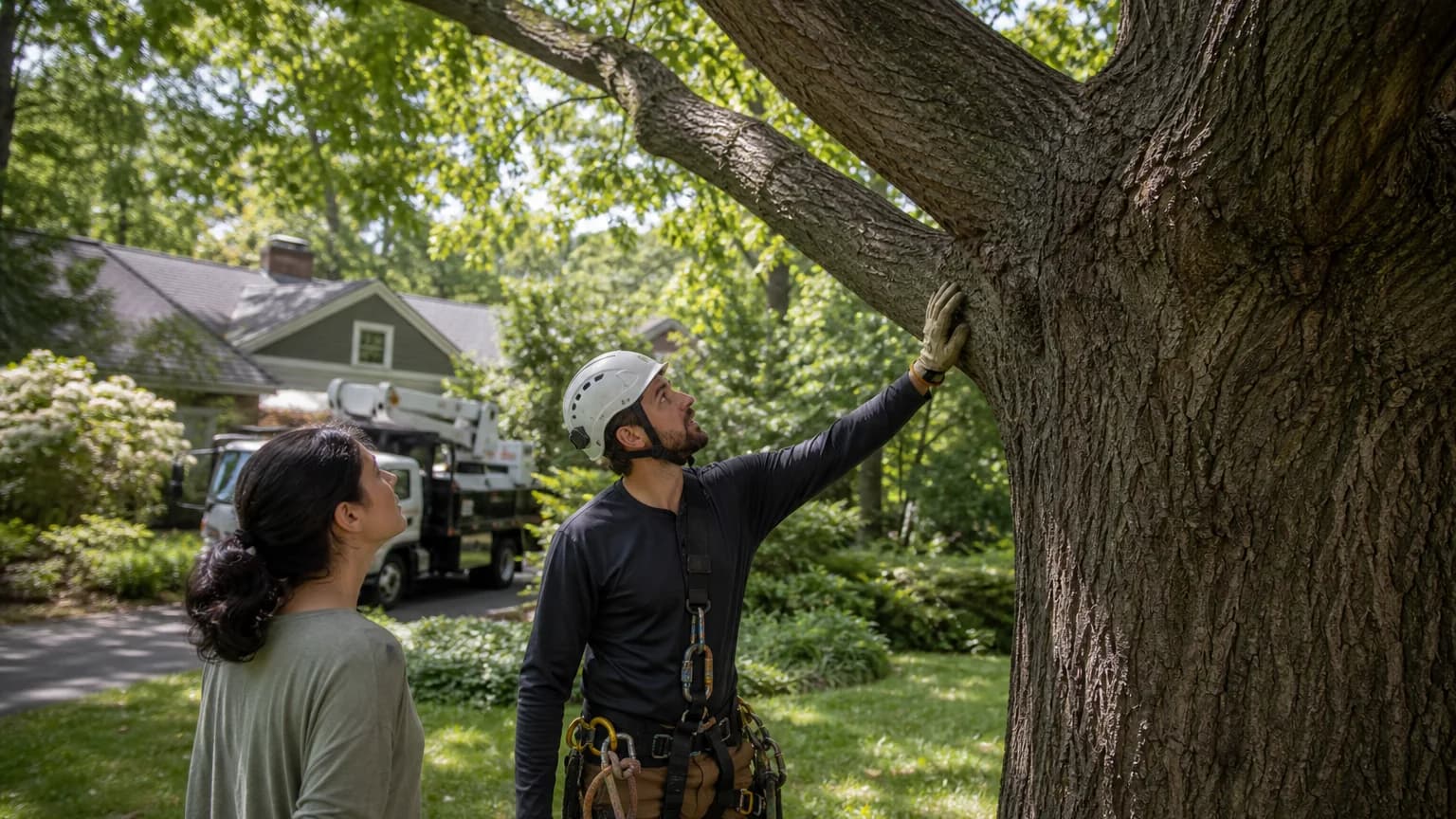
Tree service SEO helps an arborist or tree company appear when property owners need pruning, removal, stump work, risk assessment, plant health care, or storm response. The most valuable searches are specific and local. A homeowner looking at a damaged limb needs a different answer from a property manager planning seasonal maintenance.
The site should make that distinction clear, show that the company can perform the work safely, and set realistic expectations for assessment and scheduling. Search visibility is useful only when it produces qualified jobs inside the actual service area.
Build Service Pages Around Distinct Tree Problems
- Tree removal and complex-access removal
- Structural pruning, crown cleaning, and clearance work
- Storm damage and emergency assessment
- Stump grinding and site restoration
- Cabling, bracing, and risk mitigation when offered by qualified staff
- Plant health care, diagnosis, and treatment
- Commercial, HOA, municipal, or utility-adjacent work where applicable
A strong page explains when the service is appropriate, how an assessment works, what affects access and equipment, what cleanup includes, and what credentials support the work. Do not imply that a photo or online form can replace an on-site safety evaluation when it cannot.
Show Safety and Expertise with Verifiable Details
Property owners are evaluating risk as much as price. Publish accurate insurance information, applicable licenses, arborist credentials, safety practices, equipment capabilities, and the boundaries of the service. Use original photos that show real crews working safely without exposing a customer's private address.
| Buyer concern | Content to provide | Evidence |
|---|---|---|
| Can this tree be saved? | Assessment and pruning/health-care process | Credentialed evaluation, comparable work |
| Can it be removed safely? | Access, rigging, equipment, and protection approach | Crew and equipment photos, insurance details |
| What happens after removal? | Debris, stump, grading, and restoration scope | Clear inclusions and finished-site examples |
| Is this an emergency? | Immediate hazards and call process | Real coverage, triage expectations, safety guidance |
Prepare for Storm and Seasonal Demand
Publish evergreen service pages before weather events, then keep profile hours and operational updates accurate when demand changes. A storm page should explain safety, triage, realistic response, insurance documentation, and what customers should avoid. It should not exploit urgency with guarantees the crew cannot meet.
Never advise an untrained property owner to approach downed lines, unstable trunks, hung limbs, or an active work zone. Safety guidance should direct them to the appropriate utility or emergency service when necessary.
Strengthen Google Maps and Service-Area Signals
Configure the Google Business Profile with the real business name, eligible location or service area, accurate category, local phone, and services. Add recent work photos, keep hours current, and align contact details across trusted listings.
A service-area business should describe where crews reliably work and what affects travel or response. Add a location page only when real jobs, tree conditions, regulations, partners, and operational details make that market meaningfully different.
Keep the public business name, local phone, website, hours, and service-area details aligned across maps, arborist directories, trade associations, and general business listings. That consistency helps customers recognize the same company at every step and prevents an old dispatch number or former address from interrupting an urgent inquiry.
Earn Local Links from Real Work
- Contribute expert guidance to community tree or storm-preparedness resources
- Maintain accurate profiles with arboriculture and trade organizations
- Support local conservation, planting, or education projects when aligned with the business
- Create useful species, pest, storm, and seasonal guides based on local field experience
- Document commercial or community projects that partners can credibly reference
Track Qualified Jobs by Service and Market
Record calls and forms by requested service, location, urgency, property type, qualification, estimate, and won revenue. Emergency-call volume can make a month look successful even when it falls outside the profitable service area. Measure completed work and margin alongside visibility.
Tree Service SEO FAQs
Should tree companies create a separate storm page?
Yes, if emergency assessment and storm work are real services. Keep the page evergreen, explain safety and triage clearly, and update operational availability without making unrealistic response promises.
Do arborist credentials help search visibility?
Accurately documented credentials strengthen customer trust and entity clarity. They should include the credentialing organization and be supported by qualified staff and relevant service content.
Can tree-service pages use job-site photos?
Yes, with permission and proper privacy safeguards. Show the service, safety setup, equipment, and outcome without revealing sensitive address details or depicting unsafe practices.

Written by
Jason JacksonChief Operating Officer, Locafy Limited
COO at Locafy (Nasdaq: LCFY). Builds and operates AEO systems for local businesses. Founded Growth Pro Agency before joining Locafy via acquisition.